
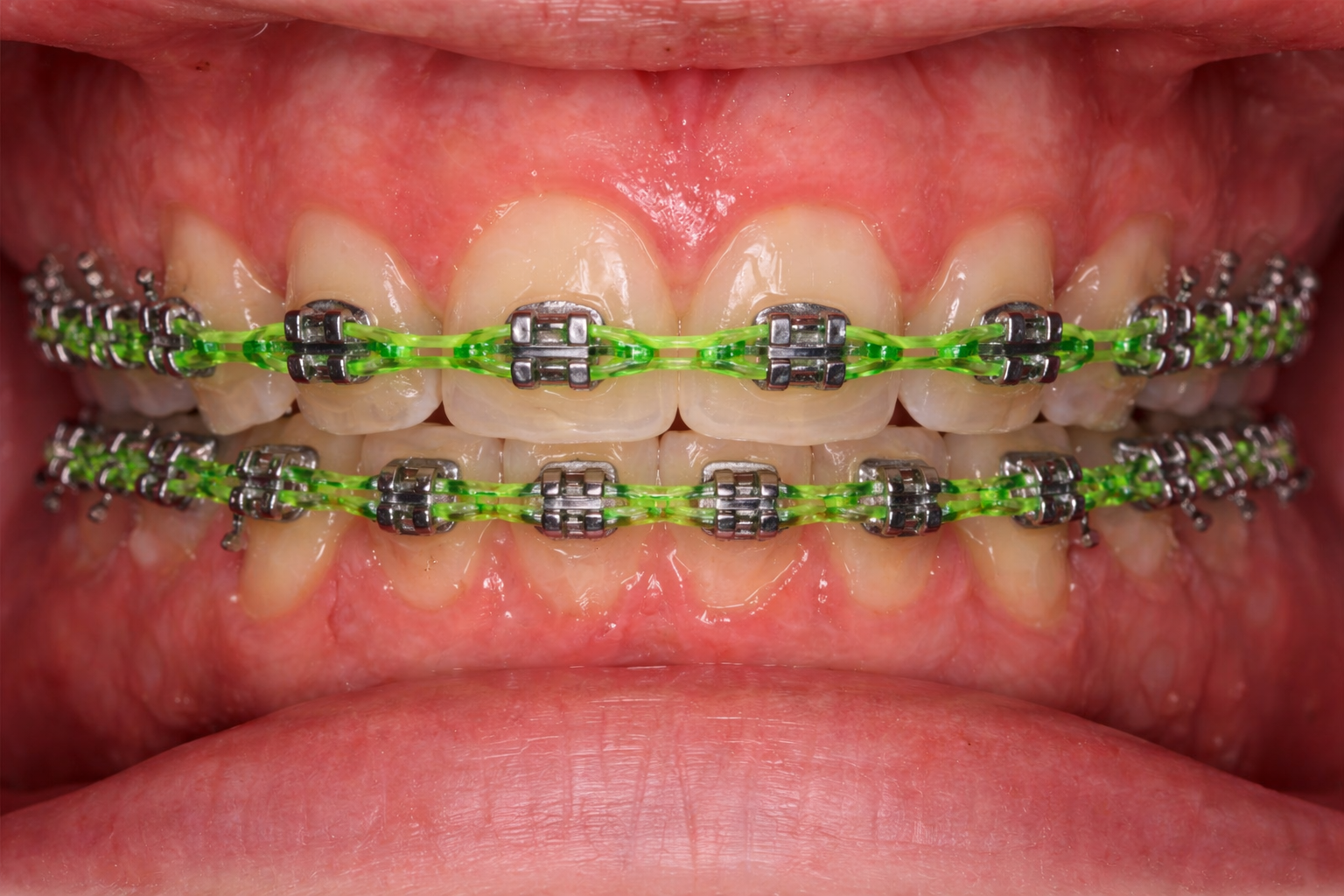
If you wear braces and your orthodontist has mentioned using power chains, it’s natural to wonder—do they hurt?
The short answer is yes, but only temporarily. Most patients experience mild soreness that fades within a few days. This guide explains what power chains are, why they may cause discomfort, how long it usually lasts, and practical tips to help you feel better so you’ll know exactly what to expect.
What Are Power Chains in Braces?
Power chains are small elastic loops connected together and placed over your braces. Unlike the individual elastic ties used for each bracket, power chains link several teeth at once, creating a steady and controlled pressure. Orthodontists use them to:
- Close gaps between teeth
- Correct spacing or alignment issues
- Fine-tune the position of teeth before removing braces
They’re a standard and effective part of orthodontic treatment for both teens and adults.
Do Power Chains Hurt?
It’s common to feel some soreness when power chains are first applied or adjusted. The discomfort comes from the increased pressure used to guide teeth into their ideal positions.
You might notice:
- A feeling of pressure or tightness in your teeth
- Tenderness when biting or chewing
- Sensitivity to firmer foods
- A dull, achy sensation rather than sharp pain
For most patients, this is a normal sign that the power chains are doing their job and that tooth movement is progressing as planned.
How Long Does the Discomfort Last?
Typically, soreness from power chains follows this pattern:
- First 24–72 hours: Mild to moderate discomfort
- 3–5 days: Noticeable improvement
- About 1 week: Most patients feel back to normal
Pain tolerance varies from person to person. If the discomfort persists beyond a week or feels unusually intense, it’s best to contact your orthodontist.
Are Power Chains More Painful Than Regular Adjustments?
In general, power chains may feel slightly more uncomfortable than a standard tightening, but less painful than getting your braces put on for the first time. Because they apply continuous pressure over multiple teeth, the initial tightness can feel stronger—but your mouth quickly adapts.
How to Relieve Power Chain Discomfort
If your power chains are causing soreness, try these orthodontist-recommended tips:
- Choose soft foods. Eat items like yogurt, mashed potatoes, scrambled eggs, soup, or smoothies. Avoid crunchy or sticky foods until your teeth feel better.
- Use cold therapy. Sip on cold water, eat chilled foods, or apply an ice pack to your cheek to reduce inflammation and numb tenderness.
- Take mild pain relievers. If approved by your healthcare provider, medications such as ibuprofen or acetaminophen can ease discomfort.
- Rinse with warm salt water. This helps calm gums and minimizes irritation around brackets and chains.
- Be patient. Your mouth simply needs time to adjust—the soreness usually fades on its own.
When to Call Your Orthodontist
A little soreness is expected, but contact your orthodontist if you notice:
- Pain lasting longer than 7 days
- Sharp, worsening, or throbbing pain
- Swelling or bleeding around gums
- A broken or detached power chain
These symptoms may indicate that something needs to be adjusted.
Are Power Chains Safe?
Yes. Power chains are safe, reliable, and widely used in modern orthodontics. When managed by a qualified orthodontist, they apply controlled pressure that gradually straightens teeth without harming roots or gums.
Final Thoughts
Although power chains can bring a few days of mild soreness, the benefits far outweigh the temporary discomfort. They can help speed up treatment, close small gaps, and perfect your smile before braces removal.
If you’re anxious about pain or sensitivity, talk with your orthodontist—they can tailor your treatment plan and provide guidance to keep you comfortable throughout the process. A little patience now leads to a lifetime of confident smiles.
